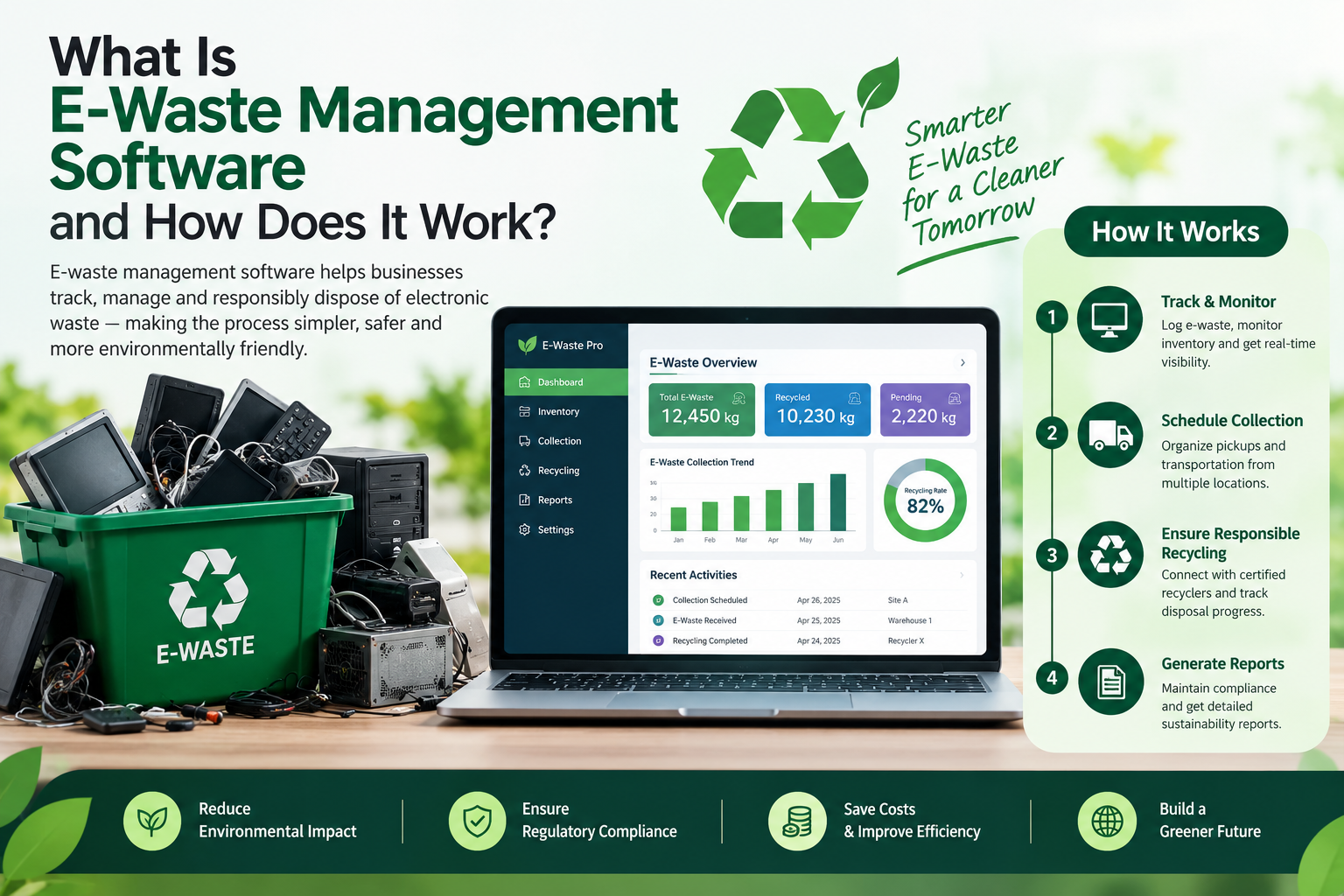
Managing electronic waste has become a major responsibility for businesses, manufacturers, producers, importers, and recyclers. With growing amounts of discarded electronic devices, companies need better ways to collect, track, recycle, and report e-waste. This is where e-waste ERP for EPR compliance can make a significant difference. An ERP system designed for e-waste management brings different business processes into one centralized platform and helps organizations manage their EPR-related activities more efficiently.
Instead of relying on spreadsheets, emails, paperwork, and multiple disconnected systems, businesses can use an integrated platform to manage collection, recycling, documentation, inventory, reporting, and compliance data. This not only saves time but also creates better visibility into the entire e-waste lifecycle.
E-waste ERP software
E-waste ERP software is a specialized enterprise resource planning solution designed to support businesses involved in electronic waste collection, recycling, processing, and compliance. Unlike conventional ERP systems, e-waste ERP solutions focus on workflows that are specific to the waste management and recycling industry.
The software can help businesses manage collection centers, recycler operations, material movement, inventory, vendors, customers, invoices, and compliance-related records from one platform. It can also centralize important information, making it easier for teams to access accurate data when required.
For companies dealing with large volumes of e-waste, having all operational information in one system can reduce manual work and improve coordination between departments. Employees can spend less time maintaining separate spreadsheets and more time focusing on actual business operations.
EPR compliance software
EPR compliance software helps organizations manage their Extended Producer Responsibility activities in a structured and organized way. EPR requires responsible businesses to monitor their obligations related to products placed on the market and their end-of-life management.
With dedicated software, companies can maintain compliance-related information, track collection and recycling activities, organize supporting documents, and generate reports based on available operational data. This can make compliance management more transparent and easier to monitor.
Another advantage is centralized recordkeeping. Instead of searching through different files to find certificates, transaction records, recycling data, or collection information, teams can access relevant information through a single system. This becomes particularly useful when businesses handle a large number of transactions or work with multiple recyclers and collection partners.
E-waste management software
E-waste management software provides businesses with tools to manage electronic waste from collection through processing and recycling. Effective management requires visibility across different stages, including waste collection, transportation, storage, segregation, processing, and final recycling.
A centralized software platform can help businesses track these activities and maintain digital records for each stage. Managers can monitor inventory levels, identify pending activities, and keep track of material movement without depending entirely on manual records.
For growing recycling businesses, this type of system can also improve operational efficiency. Automated workflows can reduce repetitive data entry, while dashboards can give management a clearer picture of ongoing activities. Better data visibility can ultimately help businesses identify delays, improve resource planning, and make more informed operational decisions.
EPR management system
An EPR management system brings EPR-related activities into a centralized digital environment. For producers, importers, manufacturers, and other organizations with EPR responsibilities, managing large amounts of compliance data manually can become difficult.
An integrated system can organize information related to collection targets, recycling activities, certificates, partners, transactions, and reporting. It can also help businesses maintain a consistent record of their compliance activities over time.
The major benefit of an EPR management system is organization. Teams can work with standardized processes instead of maintaining separate records for different compliance activities. This can reduce duplication, improve data accuracy, and make it easier to identify missing information before reports are prepared.
Businesses can also use system-generated dashboards and reports to understand their progress. When compliance information is available in one place, management teams can make decisions based on current operational data rather than outdated spreadsheets.
E-waste recycling ERP software
E-waste recycling ERP software is designed specifically for organizations involved in electronic waste recycling and recovery operations. Recycling businesses typically manage different types of materials, vendors, collection sources, processing activities, inventory movements, and customer transactions.
An ERP platform can connect these processes and provide a centralized view of recycling operations. For example, a business can record incoming e-waste, track material classification, monitor processing stages, update inventory, and maintain records of recycled output.
The system can also help recyclers manage relationships with producers, collection partners, suppliers, and customers. By keeping operational and financial information connected, businesses can reduce communication gaps and improve workflow coordination.
For companies working toward better EPR compliance, recycling ERP software can also support documentation and reporting processes. Accurate digital records can make it easier to demonstrate recycling activities and maintain the information needed for compliance reporting.
How E-Waste ERP Supports EPR Compliance
The main purpose of e-waste ERP for EPR compliance is to connect day-to-day e-waste operations with compliance requirements. Instead of treating compliance as a separate administrative task, organizations can integrate compliance-related information into their regular workflows.
For example, collection data can be recorded when e-waste enters the system, while recycling information can be updated as materials move through processing. Supporting documents and transaction details can then remain connected to the relevant records.
This approach can improve data consistency and reduce the possibility of missing information. It also provides businesses with better visibility into their EPR activities and helps them monitor progress more systematically.
Automation is another important advantage. Repetitive tasks such as data entry, record generation, status updates, and report preparation can potentially be streamlined through predefined workflows. This allows employees to focus on activities that require human attention and decision-making.
Key Benefits of E-Waste ERP for EPR Compliance
Implementing an e-waste ERP solution can provide several operational benefits. First, it creates a centralized database where compliance and business information can be managed together. Second, it can reduce dependence on spreadsheets and manual documentation.
Better tracking can also improve accountability. Businesses can identify where e-waste was collected, how it moved through the recycling process, and what happened at different stages. This creates a clearer digital trail of activities.
Another important benefit is scalability. As a company grows, the number of transactions, partners, collection points, and compliance records can increase significantly. An ERP system can provide a structured framework for managing this growing volume of information.
Finally, improved reporting can help management understand business performance and compliance progress. Instead of compiling information manually from multiple sources, teams can use centralized data to prepare reports more efficiently.
Why Businesses Need a Digital E-Waste Compliance Solution
The e-waste industry is becoming increasingly data-driven. Businesses need to manage operational information while also maintaining appropriate compliance records. Manual systems can become difficult to manage as the volume of e-waste and number of business partners increase.
An ERP-based approach provides a more organized way to manage these activities. It connects people, processes, data, and documentation within one platform. This can improve transparency and help organizations build more consistent workflows.
For businesses looking to strengthen their EPR processes, investing in an e-waste ERP for EPR compliance can therefore be an important step toward better operational control and digital transformation.
Conclusion
E-waste management involves much more than collecting discarded electronics. Businesses need to coordinate collection, transportation, inventory, recycling, documentation, reporting, and compliance activities effectively. E-waste ERP for EPR compliance provides a centralized approach to managing these processes.
From E-waste ERP software and EPR compliance software to e-waste management software, EPR management systems, and e-waste recycling ERP software, digital solutions can help organizations improve visibility, reduce manual processes, and maintain organized records. As e-waste volumes continue to grow, businesses that adopt structured digital systems can manage their operations more efficiently while supporting their ongoing EPR responsibilities.
FAQs
1. What is e-waste ERP for EPR compliance?
It is an ERP solution that helps businesses manage e-waste operations, records, recycling activities, and EPR-related compliance processes from one platform.
2. Who can use e-waste ERP software?
Producers, manufacturers, importers, recyclers, collection partners, and other organizations involved in e-waste management can use it.
3. How does ERP help with EPR compliance?
It centralizes compliance data, tracks e-waste activities, manages documentation, and supports organized reporting.
4. Can e-waste ERP reduce manual work?
Yes, automation and centralized workflows can reduce repetitive data entry, paperwork, and the need to maintain multiple spreadsheets.
5. Why is e-waste management software important?
It helps businesses track e-waste across different stages while improving operational visibility, recordkeeping, and process management.