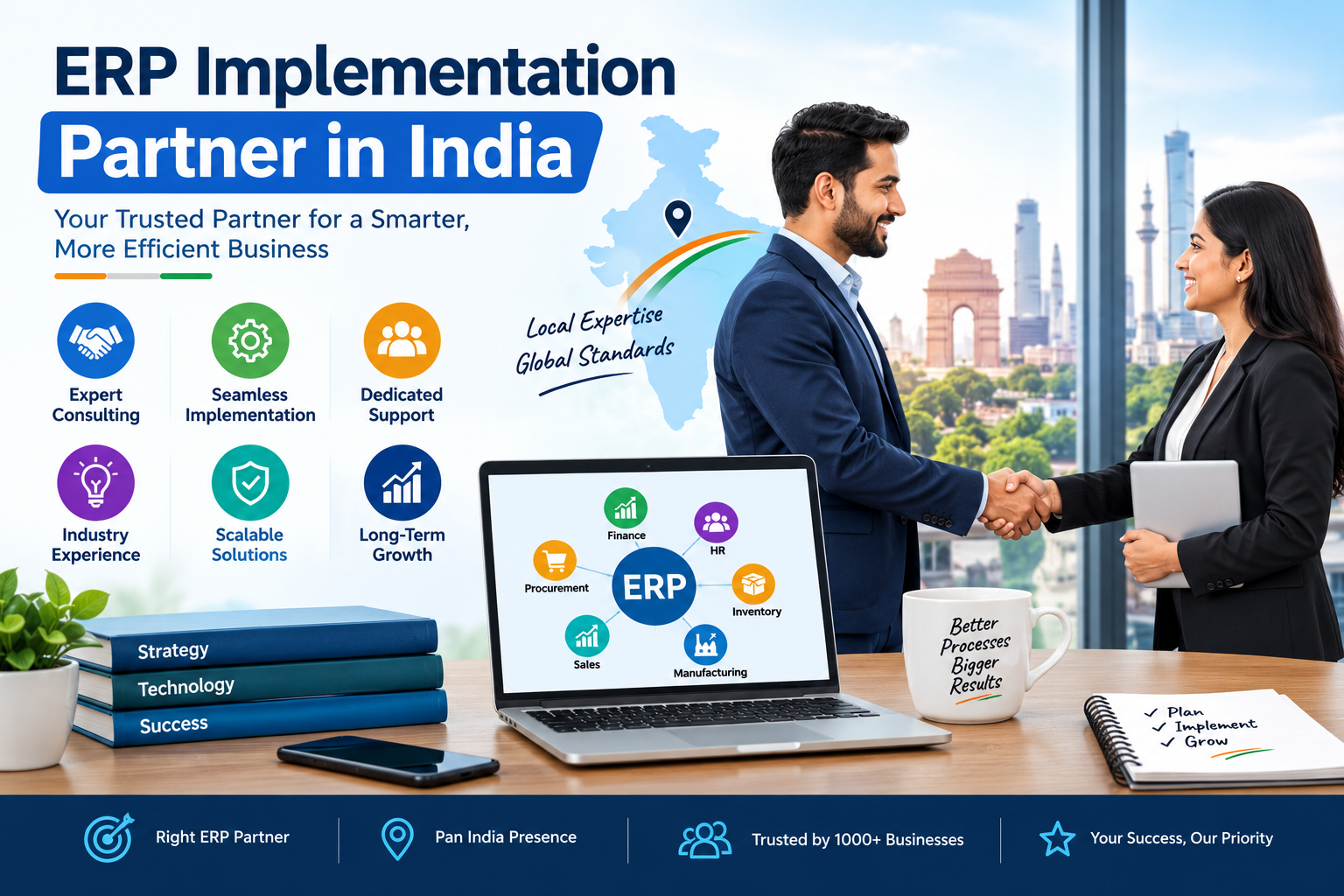
In today's competitive business environment, companies need efficient systems to manage their daily operations, finances, inventory, sales, and customer relationships. Managing all these activities through separate software can create confusion, increase manual work, and lead to unnecessary errors. This is why many businesses are adopting Enterprise Resource Planning (ERP) systems to bring their operations together. However, choosing the right technology is only one part of the process. Selecting the right ERP Implementation Partner in India is equally important because the success of an ERP project depends on proper planning, technical knowledge, and professional guidance.
An experienced implementation partner understands business requirements and helps organizations select, customize, and implement suitable ERP solutions. From initial consultation to employee training and post-implementation support, the right partner makes the entire process more manageable. Businesses should carefully evaluate their options before making a decision to ensure their ERP investment delivers long-term value.
Why Do Businesses Need ERP Implementation Services in India?
Implementing an ERP system involves more than installing software. It requires understanding existing business processes, identifying operational challenges, configuring the system, and ensuring that different departments can work together efficiently. Professional ERP implementation services in India help businesses manage these activities through a structured approach.
A reliable implementation service provider begins by understanding the company's requirements, business size, industry, and future goals. Based on this information, the team recommends suitable modules and creates an implementation roadmap. These services may include data migration, software configuration, system integration, employee training, and technical support.
For example, a manufacturing company may require production planning, inventory tracking, purchase management, and quality control features. On the other hand, a retail business may prioritize billing, stock management, customer information, and sales reporting. Professional implementation services ensure that the selected ERP system supports these different operational needs instead of forcing businesses to change everything unnecessarily.
How to Evaluate ERP Implementation Companies in India?
Choosing among different ERP implementation companies in India requires proper research. Every company may offer different technologies, implementation methods, industry experience, and support services. Therefore, businesses should look beyond attractive pricing or marketing promises when comparing potential partners.
One of the first things to check is the company's previous implementation experience. Ask whether it has worked with businesses in your industry and whether it understands the operational challenges associated with your sector. Reviewing client feedback, project portfolios, and case studies can provide a clearer picture of its capabilities.
Businesses should also evaluate the company's communication process. ERP implementation involves regular discussions between technical teams, management, and employees. A partner that provides clear updates, realistic timelines, and transparent pricing can make the project easier to manage.
Before finalizing an agreement, discuss project milestones, customization costs, training arrangements, maintenance services, and post-launch support. These details help prevent misunderstandings and make it easier to measure the partner's performance throughout the project.
What Makes ERP Software Implementation in India Successful?
Successful ERP software implementation in India depends on aligning technology with actual business requirements. Even an advanced ERP platform may fail to deliver the expected results if it is not configured correctly or employees are not prepared to use it.
The process generally starts with requirement analysis. During this stage, the implementation team studies existing workflows and identifies areas that need improvement. The next step involves selecting relevant ERP modules and configuring the system according to business operations.
Data migration is another important stage. Companies often have years of financial, customer, supplier, and inventory information stored in different systems. This information must be reviewed, cleaned, and transferred accurately to the new ERP platform.
After configuration and migration, the system should be tested before going live. Testing helps identify technical issues, incorrect reports, integration problems, and workflow errors. Employees should also receive practical training so they understand how to perform their daily tasks using the new platform.
A well-planned implementation process reduces disruptions and helps businesses achieve better coordination between departments.
Why Hire ERP Implementation Consultants in India?
Professional ERP implementation consultants in India provide valuable guidance to businesses that may not have sufficient internal technical expertise. Their role is to understand organizational requirements and help management make informed decisions about ERP technology.
Consultants typically evaluate existing business processes, identify operational gaps, recommend suitable software modules, and prepare implementation strategies. They can also help businesses decide which processes require customization and which can work effectively with standard ERP features.
Another important responsibility is managing communication between business stakeholders and technical developers. Employees may understand their daily operational problems, while developers understand the technical capabilities of the software. Consultants connect these two sides to ensure that the final solution addresses practical business needs.
Their guidance is particularly useful for organizations implementing ERP for the first time. With professional consultation, companies can avoid unnecessary features, reduce implementation confusion, and establish realistic expectations regarding project costs and timelines.
How to Select Reliable ERP Solution Providers in India?
Finding suitable ERP solution providers in India requires understanding what your business actually needs from an ERP platform. A provider should offer solutions that match your current operations while allowing room for future expansion.
Start by identifying the main challenges your organization wants to solve. These may include inventory inaccuracies, delayed financial reporting, disconnected departments, inefficient purchasing, or limited business visibility. Once these requirements are clear, comparing available ERP solutions becomes easier.
Scalability should also be considered. A growing business may eventually need additional users, locations, departments, or advanced reporting capabilities. The selected provider should offer a flexible solution that can accommodate these changes without requiring a complete system replacement.
Integration capabilities are equally important. Your ERP system may need to connect with existing accounting tools, CRM platforms, e-commerce websites, payment systems, or other business applications. A provider that understands these requirements can help create a more connected working environment.
Finally, compare licensing costs, customization charges, implementation timelines, and support policies. A suitable solution provider should explain these factors clearly so businesses can make decisions based on long-term value rather than initial cost alone.
What Should You Expect from Experienced ERP Implementation Experts?
Experienced ERP implementation experts play an important role in ensuring that the technology works effectively after deployment. Their responsibilities extend beyond software installation and include technical configuration, system testing, troubleshooting, employee support, and performance improvement.
A professional team should understand how different ERP modules interact with each other. For example, when a sales order is created, the system may need to update inventory records, generate financial information, and initiate delivery-related activities. Proper configuration ensures that these processes happen accurately and efficiently.
Implementation experts also help businesses handle unexpected challenges. These may include data inconsistencies, integration errors, user access problems, or changes in operational requirements. Having skilled professionals available during these situations can prevent minor issues from affecting overall productivity.
Employee training is another essential responsibility. Even a technically successful ERP project may face difficulties if employees are uncomfortable using the system. Experts should provide practical guidance, documentation, and ongoing assistance to encourage adoption.
Businesses should also look for partners that offer continued technical support after implementation. Regular system reviews, software updates, and performance monitoring help maintain the effectiveness of the ERP platform.
Key Factors to Consider Before Finalizing an ERP Partner
Before selecting an ERP Implementation Partner in India, businesses should carefully examine a few important factors:
- Industry experience: Choose a partner familiar with your business sector and operational requirements.
- Technical expertise: Check its ability to configure, customize, and integrate ERP systems.
- Project management: Ensure that the company follows a structured implementation process with clear milestones.
- Transparent pricing: Understand software licensing, implementation, customization, and maintenance expenses.
- Employee training: Confirm that practical training and user documentation are included.
- After-sales support: Discuss how technical issues, updates, and future improvements will be handled.
These considerations help organizations identify a partner that understands both their technical requirements and business objectives.
Conclusion
Implementing an ERP system is an important investment that can improve productivity, simplify business processes, and provide better control over organizational activities. However, achieving these benefits requires more than selecting the right software. Businesses must work with professionals who understand their requirements and can guide them throughout the implementation journey.
Choosing the right ERP Implementation Partner in India allows organizations to reduce implementation challenges, improve departmental coordination, and build a stronger technology foundation. Companies should compare industry experience, technical capabilities, project management methods, pricing, and support services before making their final decision.
With proper planning and the right implementation team, businesses can develop an integrated working environment that supports operational efficiency and long-term growth.
Frequently Asked Questions (FAQs)
1. What does an ERP implementation partner do?
An ERP implementation partner helps businesses select, configure, customize, and deploy ERP software. It also provides employee training, system integration, and ongoing technical support.
2. How do I choose the right ERP implementation partner in India?
Evaluate industry experience, technical expertise, client reviews, implementation processes, pricing transparency, and post-implementation support before making a decision.
3. How long does ERP implementation usually take?
The timeline depends on business size, system complexity, customization, and data migration requirements. Small projects may take a few weeks, while larger implementations can take several months.
4. Why is employee training important during ERP implementation?
Training helps employees understand the new system and perform their daily responsibilities correctly. It also improves user adoption and reduces operational mistakes.
5. Does an ERP implementation partner provide support after deployment?
Most professional partners offer post-implementation assistance, troubleshooting, maintenance, updates, and system optimization to help businesses maintain smooth operations.