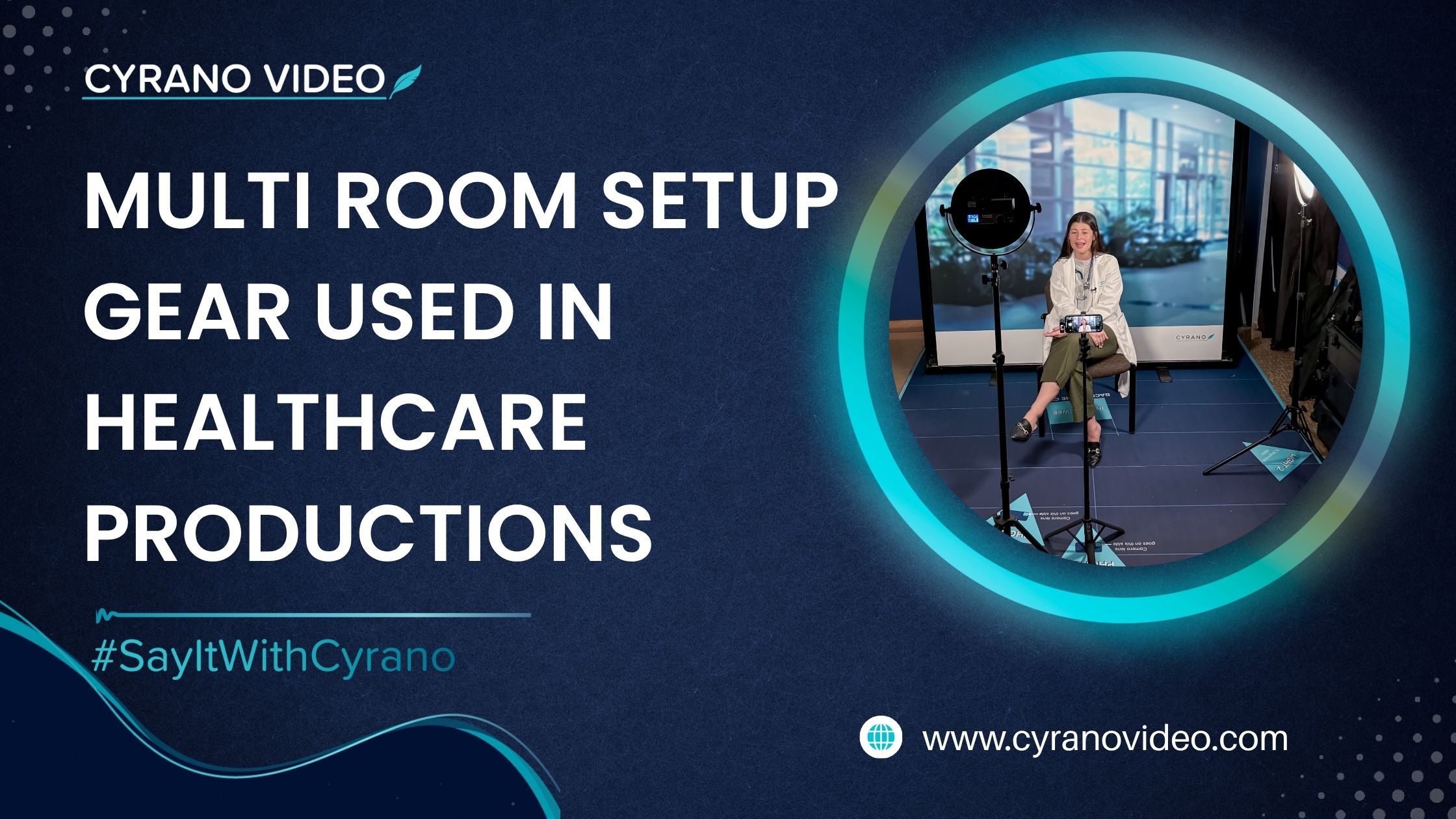
Across the healthcare world, video output has expanded rapidly. Hospitals now rely on visual content for patient guidance, staff learning and day to day communication, leading to a steady rise in production needs. With growing demand comes an increasing need to manage larger and, often, more complex filming environments. One noticeable shift is the adoption of multi-room video setups. By using these setups, production teams can film several areas simultaneously while keeping the flow of the story intact throughout the facility. This move is largely supported by affordable healthcare video production, allowing hospitals to widen their scope without stretching their budgets.
The Need for Multi-Room Coverage
Hospitals function across many levels, and each unit adds to the narrative of care. A single location cannot show the pace, structure and collaboration that define these environments. Multi room filming opens the door to capturing operating rooms, exam zones, walkways and recovery units all at once. This results in richer material for procedure guides, patient stories and staff training. Affordable healthcare video production helps teams reach these extra spaces while keeping overall costs under control.
Why Hospitals Prefer Multi-Room Setups
Hospitals rely on speed and accuracy. Video teams working inside these environments must respond quickly, capture real moments, and ensure there is no disruption to critical workflows. Multi-room setups create a more efficient production path. Crews can stay connected through central controls, monitor activity across rooms, and switch recording locations without the delays caused by repeatedly moving equipment. These advantages allow hospitals to capture more consistent footage and improve the quality of their final videos. Affordable healthcare video production supports these efforts by providing budget-friendly ways to deploy multiple cameras, set up stable lighting, and maintain reliable audio systems across rooms.
Consistency Across Diverse Environments
A big challenge working in hospitals is consistency of look. Lighting varies enormously between rooms, audio levels change everywhere you go, and space often restricts where the crew can stand. Multi-room setups make it easier to handle these differences because teams can plan each room’s layout. This preparation reduces the chances of uneven lighting, mismatched tones, or distracting background noise. Affordable healthcare video production gives hospitals access to equipment and expertise that keep this consistency intact while staying within financial limits. The result is a more polished video that presents the hospital professionally across every scene.
Supporting Patient Education and Internal Training
Many hospitals use videos to take patients through the steps of admission, preparation for surgery, or post-discharge instructions. Multi-room configurations allow for a much more impactful way to show these procedures. Instead of filming on different days in a different room for each scene, filmmakers can follow one seamless action in a single, real-time sequence through several environments. This leads to more natural storytelling and more straightforward explanations. During internal training, doctors and nurses can gain from multi-angle views of procedures or their simulations. Affordable healthcare video production allows hospitals to create such videos more frequently and with better quality, all while keeping costs within reach. When budgets stretch further, training libraries expand, and patient communication improves.
Strengthening Real-Time Coordination
Filming in hospitals requires precise timing. Operations are often fast-paced, and the availability of staff is minimal. Multi-room settings also offer a wide canvas for marketing teams to capture the daily life of the hospital, from a demonstration of care teams in collaboration to interactions across departments. It allows the production to better demonstrate the environment of the hospital. It creates trust and further elucidates the identity a hospital has with the community. Affordable healthcare video production makes these stories more accessible by encouraging teams to explore multiple rooms without worrying about a steep financial investment.
Improving Storytelling for Hospital Branding
Videos also tell stories of the values, work culture, and commitment to patient care. The multi-room setup gives a wider canvas for marketing teams to showcase daily life at the hospital. They can then focus on building teams of care working together and capturing interactions across departments, showcasing the environment of the hospital more accurately. These visuals build trust and give the community more insight into who they are as a hospital. Affordable healthcare video production makes these stories more accessible by encouraging teams to make use of multiple rooms without the feeling of making a steep financial investment.
The Practical Impact on Production Teams
When costs are controlled, production teams gain flexibility. They can schedule longer shoots, include more camera operators, and cover additional areas that were previously out of reach. This flexibility gives them room to adapt with frequent last-minute changes, especially in clinical environments. Affordable healthcare video production makes this possible with the introduction of cameras, lighting tools, and audio equipment that are cost-effective while performing well in healthcare settings. As a result, crews can balance creativity with practicality while still delivering high-quality content.
Conclusion
The rise of multi-room video setups shows how hospitals are adapting to the growing demand for visual communication. These setups help tell fuller stories, improve training materials, and support better patient understanding. Affordable healthcare video production is at the core of this movement, enabling hospitals to extend their coverage without straining their resources. With greater access to reliable tools and thoughtful production planning, hospitals can create videos that reflect their professionalism and commitment to care across every room they capture.